
2026-08-31 · John Smith
How Tempe Residents Dry Out Homes After Summer Storms
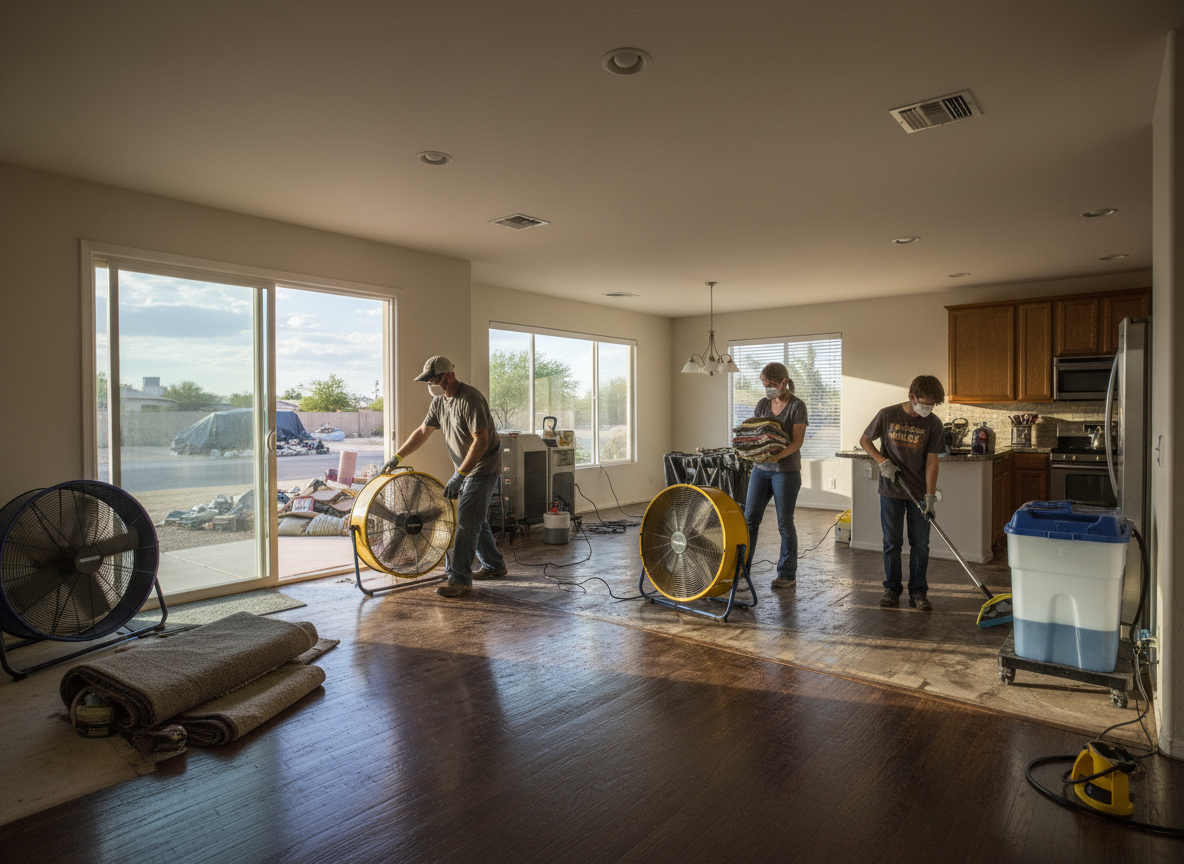
In Tempe’s hot desert climate, summer storms often drop 1–2 inches of rain in under an hour, leaving standing water that must be removed within 24–48 hours to limit damage to slab foundations common in Maricopa County homes. Residents in neighborhoods such as Downtown Tempe near Mill Avenue and South Tempe typically begin by extracting visible water, then run high-velocity air movers and dehumidifiers to pull moisture from drywall, subfloors, and insulation before mold sets in.
Summer Monsoon Patterns and Local Housing Risks
Tempe’s monsoon season peaks in July and August, when brief but intense downpours overwhelm street drainage around Tempe Town Lake and low-lying streets near Arizona State University. Many homes built before 1990 in Papago Park and along Baseline Road sit on concrete slabs that trap water beneath tile or carpet, allowing moisture to wick upward into walls. Flat Maricopa County terrain means runoff from Phoenix, Mesa, and Chandler streets can back up into yards, extending drying times by several days compared with sloped properties.
First 48 Hours: Extraction and Airflow Setup
Homeowners start by removing standing water with wet vacuums or pumps, then open windows on the leeward side while directing box fans outward to create cross-ventilation. In South Tempe properties, where summer temperatures often exceed 105°F, running dehumidifiers set to 45–50% relative humidity prevents rapid re-evaporation that can push moisture deeper into drywall. Placing air movers at 45-degree angles against baseboards circulates air across wet surfaces without stirring up settled dust from older plaster walls common near Mill Avenue.
Monitoring Moisture Levels in Slab and Wall Cavities
After visible water is gone, moisture meters check drywall at 6-inch intervals and probe slab edges where water pools longest. Readings above 15% indicate hidden saturation that requires continued drying for 5–7 additional days. In University-adjacent neighborhoods, technicians often cut small inspection holes in baseboards to insert hoses connected to negative-air machines, pulling moist air from wall cavities while keeping indoor humidity below 55% to avoid condensation on cool tile floors.
When to Call for Structural Drying Support
If moisture persists past day three, or if multiple rooms show elevated readings, residents contact specialists offering Structural Drying & Dehumidification to deploy commercial desiccant units sized for 1,500–3,000 square foot homes. Properties near Arizona State University benefit from crews familiar with older student-rental stock that lacks modern vapor barriers. Following the full Flood Damage Cleanup Timeline For Tempe Properties helps owners sequence extraction, drying, and final verification so repairs can begin without hidden moisture causing callbacks.
Preventing Mold After Drying Is Complete
Once meters read below 12% throughout the structure, HEPA vacuuming removes any remaining dust before new flooring or baseboards are installed. In South Tempe homes with frequent monsoon exposure, owners schedule annual gutter cleaning and re-grade soil 6 inches below sill plates to reduce future water entry. These steps, combined with prompt drying after each storm, keep indoor air quality stable even during the hottest months when outdoor humidity spikes briefly during rain events.