
2026-08-31 · John Smith
Flood Damage Cleanup Timeline For Tempe Properties
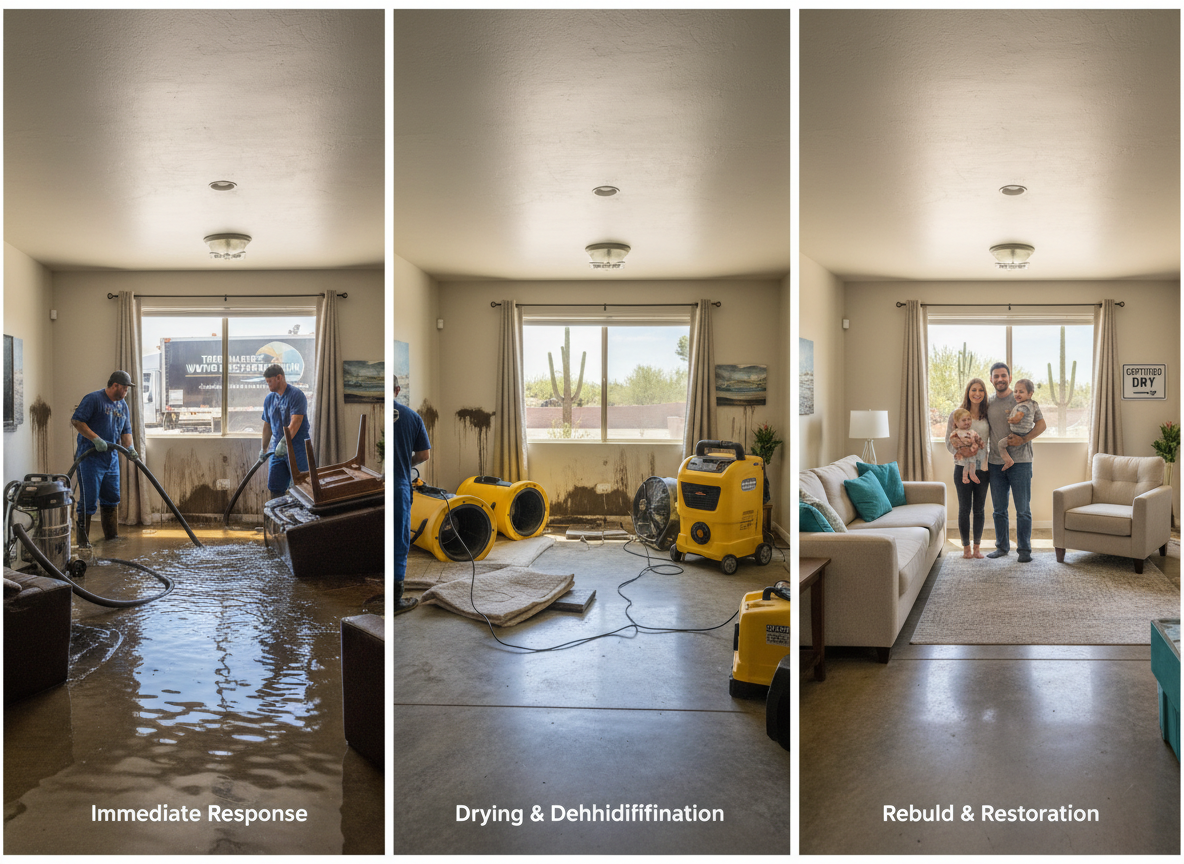
Flood damage cleanup in Tempe properties typically takes 5 to 14 days from initial extraction to final repairs. The exact duration depends on water category, affected square footage, and whether the property sits in older neighborhoods like Downtown Tempe or South Tempe where plumbing systems date back decades.
Immediate Assessment and Safety Measures
Property owners in Maricopa County first secure power and gas before any cleanup begins. Technicians arrive within hours to classify the water and map moisture with infrared cameras and meters. In areas near Papago Park or Arizona State University, basements are rare but slab foundations common, so crews check for hidden water under tile and carpet. Safety protocols include PPE and containment barriers to prevent cross-contamination into unaffected rooms. This phase usually finishes in 4 to 8 hours but can stretch longer if access is limited in multi-unit buildings along Mill Avenue. Documenting every step with photos supports later insurance claims and helps crews plan equipment needs for the next stage.
Water Extraction and Removal
Once safety is confirmed, high-volume pumps and truck-mounted extractors pull standing water from floors and walls. Flood Damage Cleanup crews target carpets, padding, and baseboards first because these materials hold moisture longest in Tempe’s low-humidity air. In South Tempe homes built on expansive soil, extraction must also address water that has wicked into subfloor seams. Most jobs remove 90 percent of free water within 24 to 48 hours. Properties near Tempe Town Lake that experience flash flooding often require multiple extraction visits because water re-enters through doors and vents. What To Do After Flash Flooding Near Tempe Town Lake outlines homeowner steps during this window.
Structural Drying and Dehumidification
After extraction, air movers and commercial dehumidifiers run continuously for 3 to 7 days. Tempe’s hot desert summers speed surface drying but can drive moisture deeper into drywall if humidity spikes from monsoon storms. Crews monitor daily moisture readings until levels drop below 12 percent on wood and 1 percent on drywall. Homes in University Heights or near Arizona State University often have thicker plaster walls that retain water longer than newer drywall. Technicians rotate equipment placement every 12 hours and may open wall cavities or remove sections of flooring. This phase prevents secondary damage and sets the stage for cleaning.
Cleaning, Sanitization, and Mold Prevention
Once structures reach target moisture levels, crews apply EPA-registered antimicrobials to studs, subfloors, and HVAC components. Emergency Water Damage Restoration protocols include HEPA vacuuming and thermal fogging in affected zones. In older Tempe stock near Mill Avenue, hidden mold can appear behind cabinets within 72 hours if drying was incomplete. Technicians test surfaces with moisture meters and ATP swabs before sealing. This step usually requires 2 to 4 days and overlaps with ongoing drying in larger homes.
Final Repairs and Restoration
After sanitization passes inspection, contractors replace drywall, insulation, trim, and flooring. Local Considerations For Flood Cleanup Near Arizona State University notes that rental properties near campus often need faster turnaround to minimize tenant displacement. Full restoration in a typical 1,800-square-foot Tempe home takes 3 to 7 additional days once materials are on site. Owners in South Tempe should budget for possible slab leak follow-up if water reached the foundation. The entire process from first call to walkthrough averages 5 to 14 days when crews work without delays from material shortages or insurance approvals.