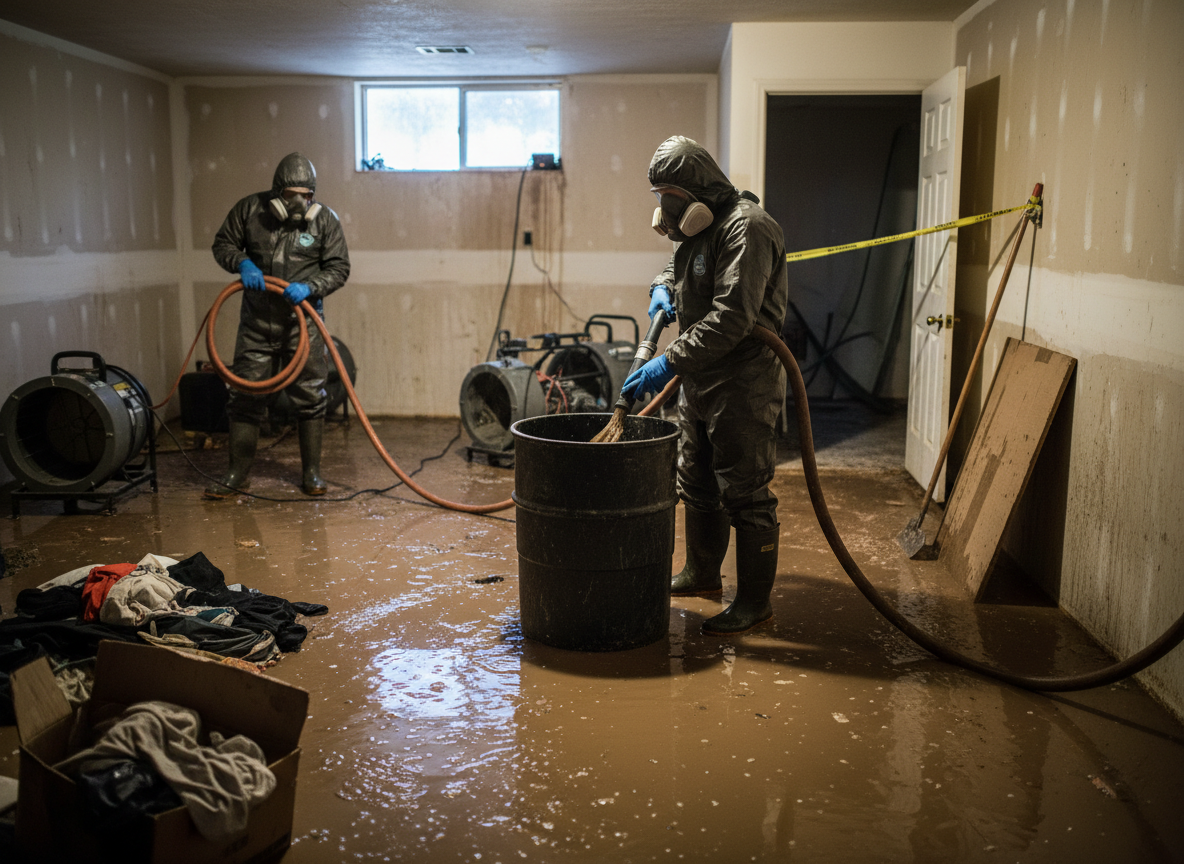
Sewage backups in Tempe often stem from aging clay sewer lines common in South Tempe homes built before 1980 and from monsoon-driven overloads that push water into basements near Tempe Town Lake. Crews must first classify the contamination level, then extract standing black water while protecting unaffected drywall and framing that can wick moisture quickly in the dry heat. Maricopa County health rules require documented antimicrobial application and moisture verification before any reconstruction begins.
Papago Park and Mill Avenue area properties frequently have slab-on-grade construction with limited access points, forcing technicians to cut strategic openings rather than rely on carpet pullers alone. Hidden voids under cabinets and behind shower pans hold bacteria long after visible water is gone, especially when daytime temperatures exceed 105 degrees and accelerate surface drying while trapping moisture deeper in the structure. Proper negative-air containment prevents cross-contamination into living spaces shared with Arizona State University student housing.
Nearby Phoenix and Mesa jobs show the same pattern: tree-root intrusion and grease buildup create repeat failures in 1960s–1970s tract homes. Restoration teams document every step for insurance adjusters and coordinate with Tempe code enforcement when sewage reaches electrical panels or HVAC returns.
Final clearance testing uses both moisture meters and ATP swabs to confirm surfaces meet post-cleanup standards before homeowners return.
Technician insight
In Tempe the thing that catches most people out with Sewage Backup Cleanup is how fast the surface dries in 110-degree heat while moisture stays trapped under the slab or behind cabinets in 1970s homes near Baseline Road. Homeowners often try to clean it themselves and push contamination deeper into the subfloor before we arrive.
South Tempe slab leak backup
Sewage backed up through a floor drain in a 1978 South Tempe ranch house after monsoon rains overwhelmed the line. Extraction revealed water had wicked under the kitchen cabinets and into the HVAC closet. Crews removed 18 linear feet of drywall, treated the slab, and ran drying equipment for four days until meters read under 12 percent. Homeowners returned after clearance testing passed.
Sewage Backup Cleanup Services We Offer
✓Black Water Extraction
Removes standing sewage from floors and subfloors in South Tempe homes using truck-mounted pumps rated for contaminated water.
✓Contaminated Drywall Removal
Cuts and disposes of affected drywall up to 24 inches above the water line while maintaining negative pressure in Downtown Tempe residences.
✓Antimicrobial Application
Applies EPA-registered disinfectants to framing and concrete slabs after extraction to address bacteria common in Maricopa County sewer backups.
✓Structural Drying and Dehumidification
Deploys commercial air movers and dehumidifiers sized for desert evaporation rates to dry cavities near Papago Park properties.
✓Odor Removal Treatment
Uses hydroxyl generators and encapsulation sealers to neutralize sewage odors that linger in older Mill Avenue area homes.
Sewage Backup Cleanup Cost in Tempe, AZ
| Service | Typical Range | What Affects It |
|---|---|---|
| Small-area sewage extraction | $600–$1,200 | Bathroom or laundry room only; price rises with slab access needs |
| Full-room cleanup and drying | $1,800–$3,500 | Includes drywall removal and dehumidification in typical South Tempe home |
| Odor neutralization add-on | $400–$800 | Hydroxyl treatment after primary cleanup |
Ranges are typical for Tempe, AZ and confirmed with an exact written quote before any work starts.
How it works
- 1
Initial Assessment
Technician inspects the affected rooms, identifies the sewage source, and maps moisture migration in the specific Tempe property.
- 2
Water Extraction
Standing black water is pumped out and removed from floors, carpets, and subflooring using equipment suited to local slab construction.
- 3
Contaminated Material Removal
Damaged drywall, insulation, and flooring are cut out and bagged for disposal following Maricopa County guidelines.
- 4
Cleaning And Disinfection
All remaining surfaces receive antimicrobial treatment and are cleaned to eliminate pathogens.
- 5
Drying And Verification
Equipment dries the structure, followed by moisture meter and clearance testing before any rebuild work.
Pricing
Pricing varies by affected square footage, depth of contamination, and whether hidden cavities require additional demolition.