
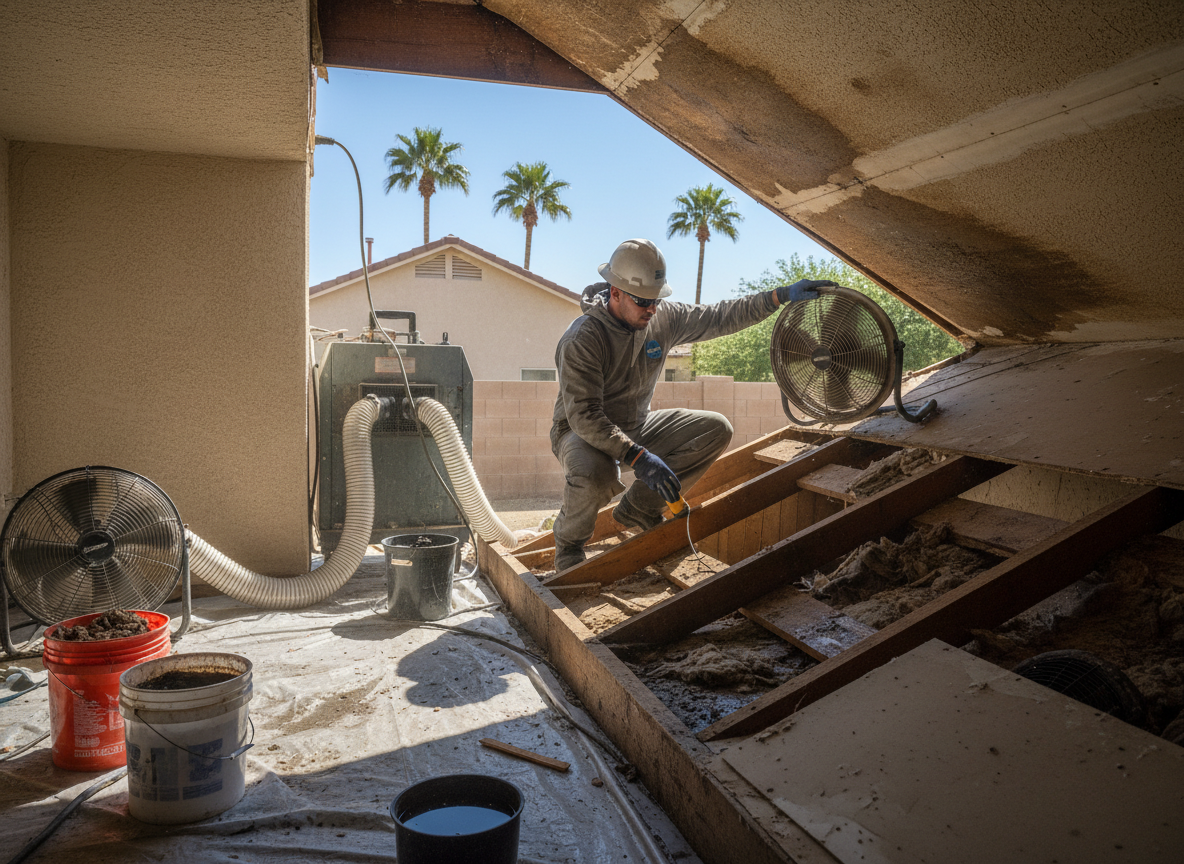
Tempe’s hot desert climate brings intense summer heat that bakes asphalt shingles and accelerates cracking around penetrations on homes in South Tempe and near Mill Avenue. When monsoon rains arrive, water finds these weak points fast and travels along ceiling joists into living spaces. Older ranch-style houses common in the area often lack modern underlayment, so leaks reach drywall and insulation before homeowners notice. Proper extraction requires removing saturated materials down to the decking rather than surface drying alone.
In neighborhoods around Papago Park and Downtown Tempe, flat-roofed commercial buildings and multi-family units add another layer of complexity. TPO and modified bitumen membranes can blister from UV exposure then split during heavy downpours. Restoration crews must trace water migration paths through multiple floors while protecting Arizona State University-area properties from secondary damage. Using thermal imaging helps locate hidden moisture pockets that standard meters miss in stucco and block construction typical of Maricopa County.
Local building practices in Chandler and Mesa border areas sometimes include parapet walls that trap water against roof edges. When leaks develop, water can pool behind these walls and migrate into adjacent units. Restoration work here includes negative air setups to prevent mold spores from spreading through shared HVAC systems. Technicians also check for compromised flashing at skylights and HVAC curbs, common failure points after years of expansion and contraction in the desert heat.
Technician insight
In Tempe the thing that catches most people out with Roof Leak Water Damage Restoration is how fast the intense summer heat dries the top layer of insulation while moisture stays trapped against the roof deck in South Tempe ranch homes. Homeowners often think the problem is solved once ceiling stains fade, yet hidden pockets remain because stucco walls and older underlayment hold water longer than expected during monsoon season.
South Tempe Ranch Home After July Monsoon
A roof leak around a skylight allowed water into the attic of a 1970s home near Baseline Road. Inspection showed moisture had traveled along ceiling joists into two bedrooms. Crews removed wet insulation, dried the decking, and replaced affected drywall while keeping the family in the home. Final readings confirmed the structure was dry before reconstruction.
Roof Leak Water Damage Restoration Services We Offer
✓Asphalt Shingle Leak Detection
Pinpoint roof entry points on South Tempe homes using moisture mapping and infrared scans to stop water before it reaches attics near Tempe Town Lake.
✓Flat Roof Membrane Restoration
Repair and reseal TPO or modified bitumen surfaces on commercial buildings in Downtown Tempe to prevent recurring ponding after monsoon events.
✓Attic Insulation Replacement
Remove and replace water-saturated insulation in older Papago Park residences while treating any early microbial growth before it spreads to living areas.
✓Ceiling and Drywall Repair
Cut out and replace stained or sagging drywall ceilings in ASU-adjacent homes, matching textures common to Maricopa County construction.
✓Emergency Roof Tarping
Install temporary reinforced tarps on storm-damaged roofs in South Tempe to protect interiors until permanent repairs can be scheduled.
Roof Leak Water Damage Restoration Cost in Tempe, AZ
| Service | Typical Range | What Affects It |
|---|---|---|
| Initial Roof Leak Assessment | $125–$275 | Varies by roof access in multi-story South Tempe homes |
| Emergency Tarping | $350–$650 | Size of damaged section and wind exposure near Tempe Town Lake |
| Attic Insulation Removal And Replacement | $1.80–$3.20 per sq ft | Depth and type of existing insulation in older Maricopa County homes |
| Ceiling Drywall Repair | $4.50–$8.00 per sq ft | Texture matching and paint finish required in Papago Park properties |
Ranges are typical for Tempe, AZ and confirmed with an exact written quote before any work starts.
How it works
- 1
On-Site Assessment
Technician inspects the roof, attic, and affected interior spaces from the Baseline Rd base, documenting moisture levels and entry points.
- 2
Water Extraction And Drying
Remove standing water and set up commercial drying equipment suited to desert humidity levels in the affected Tempe property.
- 3
Material Removal And Treatment
Cut away damaged drywall and insulation, apply antimicrobial where needed, and prepare surfaces for reconstruction.
- 4
Final Restoration And Verification
Rebuild ceilings and finishes, then confirm moisture readings meet dry standards before returning the home to normal use.
Pricing
Upfront quotes provided after inspection at 1222 E Baseline Rd during listed business hours.