
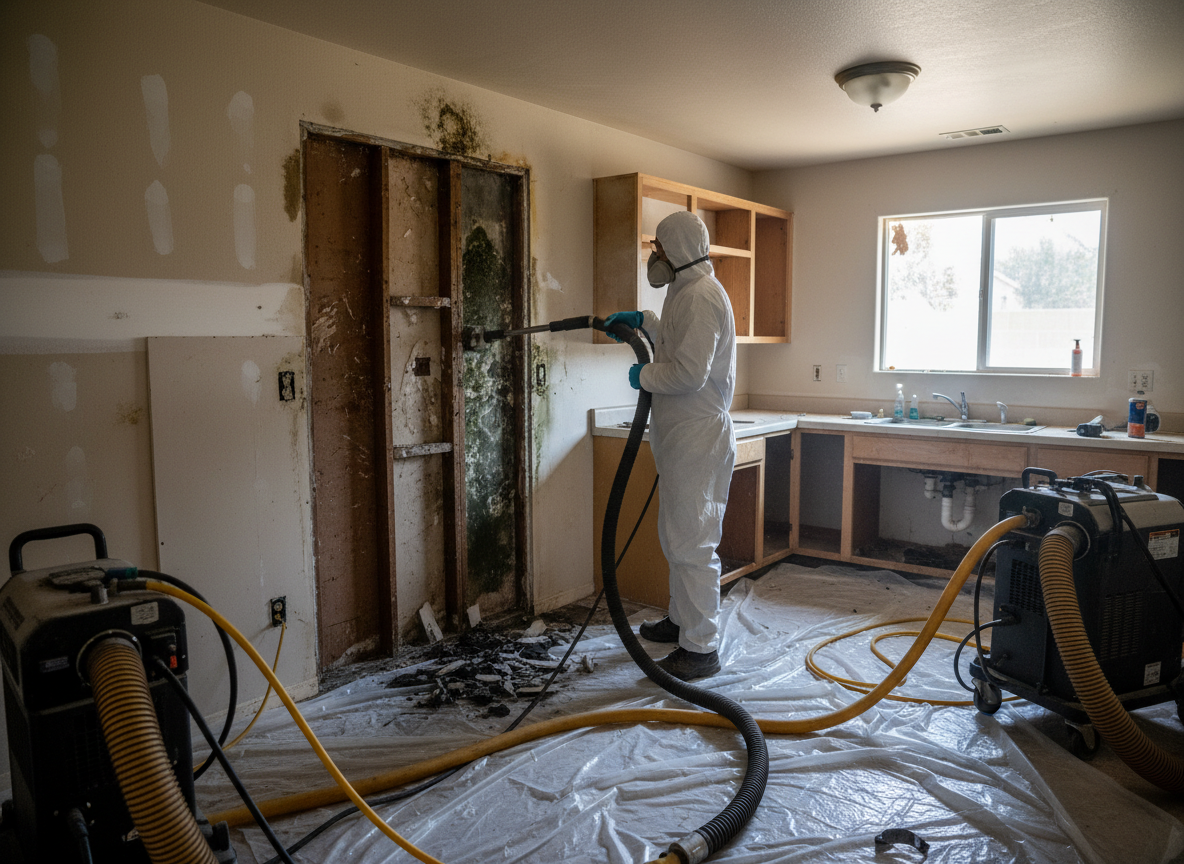
Tempe's hot desert summers push indoor humidity through evaporative coolers and older HVAC systems common in South Tempe ranch homes built in the 1970s and 1980s. When monsoon runoff or appliance leaks saturate drywall or subfloors, mold colonies often establish behind baseboards within 48 hours. Remediation crews must isolate affected rooms with negative air machines because spores travel easily through the open floor plans typical of Papago Park townhomes and Mill Avenue apartments. Failure to address hidden growth in these cavities leads to repeated musty odors even after visible water is gone.
Maricopa County properties near Arizona State University frequently use slab-on-grade construction with limited crawl space access, so water that reaches the slab edge wicks into adjacent rooms before homeowners notice. Remediation requires cutting back drywall at least 18 inches past visible staining and treating the exposed framing with EPA-registered antimicrobials. Technicians also inspect supply ducts because Tempe's mild winters keep systems running year-round, allowing spores to circulate into unaffected bedrooms. Skipping this step turns a contained bathroom job into whole-house contamination.
After initial removal, crews deploy commercial dehumidifiers sized for the square footage because ambient humidity in Chandler and Mesa corridors stays elevated long after rain stops. Moisture meters track wall cavities for several days until readings drop below 12 percent. Final clearance includes surface sampling to confirm no active growth remains before new drywall is installed. Homeowners in Downtown Tempe lofts often request documentation of these readings for insurance claims or when selling near the lake.
Technician insight
In Tempe the thing that catches most people out with Mold Damage Remediation After Water Damage is how monsoon moisture sits against south-facing slab edges in 1970s South Tempe homes; once it reaches the drywall paper, growth moves upward into the wall cavity faster than in Phoenix or Mesa because our mild winters keep the AC running and spreading spores.
Papago Park townhome after roof leak
A slow roof leak during summer storms allowed water to travel along ceiling joists into a bedroom closet. Inspection revealed black mold on the back side of drywall and inside the supply duct. Crews contained the room, removed the affected ceiling and insulation, treated the joists, and cleaned the duct run. Drying continued for four days until readings stabilized and clearance samples passed.
Mold Damage Remediation After Water Damage Services We Offer
✓Hidden Mold Inspection After Leaks
Thermal imaging and moisture mapping of walls and ceilings in Tempe homes to locate growth behind finishes before full demolition begins.
✓Drywall and Insulation Removal
Controlled demolition and bagging of contaminated materials from South Tempe and Papago Park properties to prevent spore spread during transport.
✓Antimicrobial Fogging and Treatment
Application of EPA-registered solutions to framing and subfloors in affected Maricopa County spaces after water events.
✓HVAC Duct Cleaning Post-Water Damage
HEPA vacuuming and sanitizing of supply and return lines common in Tempe ranch homes where spores travel through central systems.
✓Structural Drying and Dehumidification
Placement of commercial equipment sized for local slab homes to pull residual moisture from concrete and wood before mold returns.
✓Final Clearance Sampling
Independent air and surface testing in Downtown Tempe and Mill Avenue properties to verify remediation success before reconstruction.
Mold Damage Remediation After Water Damage Cost in Tempe, AZ
| Service | Typical Range | What Affects It |
|---|---|---|
| Small bathroom or closet remediation | $900–$1,600 | Limited to one room with no HVAC involvement |
| Kitchen or laundry room job | $1,800–$3,200 | Includes cabinet base and subfloor treatment |
| Whole-room plus adjacent hallway | $2,900–$4,800 | Multiple walls and forced-air duct cleaning |
| Clearance air sampling | $250–$450 | Independent lab results for insurance documentation |
Ranges are typical for Tempe, AZ and confirmed with an exact written quote before any work starts.
How it works
- 1
Initial Assessment
Technicians inspect the water source, map moisture with meters, and identify all affected materials in the Tempe property.
- 2
Containment Setup
Negative air machines and plastic barriers isolate the work zone to keep spores from migrating into clean areas of the home.
- 3
Removal And Cleaning
Contaminated drywall, insulation and porous materials are removed and surfaces are treated with antimicrobial agents.
- 4
Drying And Verification
Equipment dries the structure while moisture levels are tracked until clearance criteria are met.
Pricing
Project costs vary with square footage, depth of hidden growth, and whether HVAC cleaning is required.