
2026-08-31 · John Smith
Preventing Mold After Flooding In Tempe
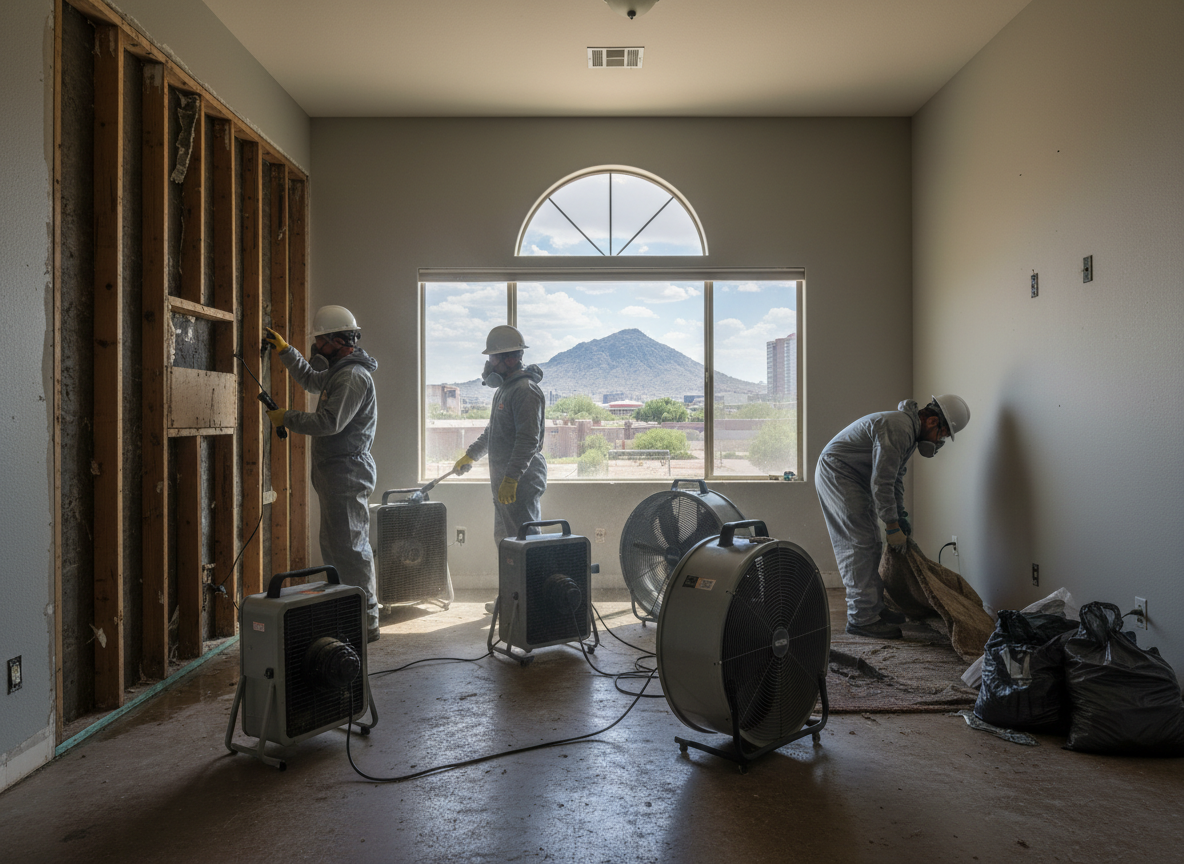
In Tempe's hot desert climate, mold growth after flooding can begin within 24-48 hours if standing water and damp materials are not removed quickly. Flooding from monsoon rains or overflow near Tempe Town Lake often saturates older homes in neighborhoods such as South Tempe and Downtown Tempe, where concrete slabs and stucco walls trap moisture longer than in drier conditions. Prompt extraction prevents spores from taking hold in drywall, carpet, and insulation common to Maricopa County properties built decades ago.
Acting Within the First 48 Hours
Remove all visible water immediately using pumps and wet vacuums to stop mold at the source. In South Tempe homes near Warner Ranch, floodwater from nearby washes can seep under floors, so lift baseboards and check subfloors within the first day. Extract hidden pockets in walls and under cabinets before they feed mold colonies that spread through HVAC systems typical in local single-story houses. Document every step with photos for insurance claims while conditions are fresh.
Ventilate affected spaces by opening windows during mild winter periods, but avoid this during peak summer heat when humidity spikes indoors. Focus on porous materials like carpet padding and drywall that absorb water fast in the region's low rainfall yet intense storm events. Discard items that cannot be fully dried within 48 hours to cut off mold food sources.
Drying and Dehumidification in Desert Conditions
Run commercial dehumidifiers and air movers continuously for 3-5 days after extraction to bring moisture levels below 60 percent in Tempe's variable climate. Homes near Mill Avenue and Arizona State University often have older wood framing that holds residual dampness, requiring targeted drying behind cabinets and in crawl spaces. Monitor with moisture meters on concrete slabs common in Papago Park area properties, as these retain water longer than frame walls.
Position equipment to create airflow across all wet surfaces without pushing spores into clean rooms. In Chandler or Mesa border zones, dust from surrounding desert can mix with flood residue, so clean surfaces before drying begins. Continue checks for 7-10 days post-event, since mild winters here allow slow evaporation that hides pockets of moisture.
Inspecting for Early Mold Signs
Check for musty odors or dark spots on walls and ceilings starting 48 hours after flooding, especially in South Tempe basements or utility rooms. Look under sinks and around plumbing in older Downtown Tempe stock where leaks compound storm damage. Test hidden areas like behind tile in bathrooms, as Tempe's hot summers accelerate growth once moisture is present.
Use a moisture meter on drywall and flooring to catch readings above 15 percent that signal risk. In neighborhoods like The Lakes, check attic insulation after roof-related flooding, since trapped water there spreads unseen. Record findings daily to track whether conditions improve or require further intervention.
When Professional Intervention Is Needed
Call for flood damage cleanup if water has reached more than 1 inch deep or affected multiple rooms, as DIY methods often miss hidden saturation in Maricopa County homes. For visible mold patches larger than 10 square feet, turn to mold damage remediation after water damage to contain spores safely. Review steps from what to do after flash flooding near Tempe Town Lake before starting any cleanup.